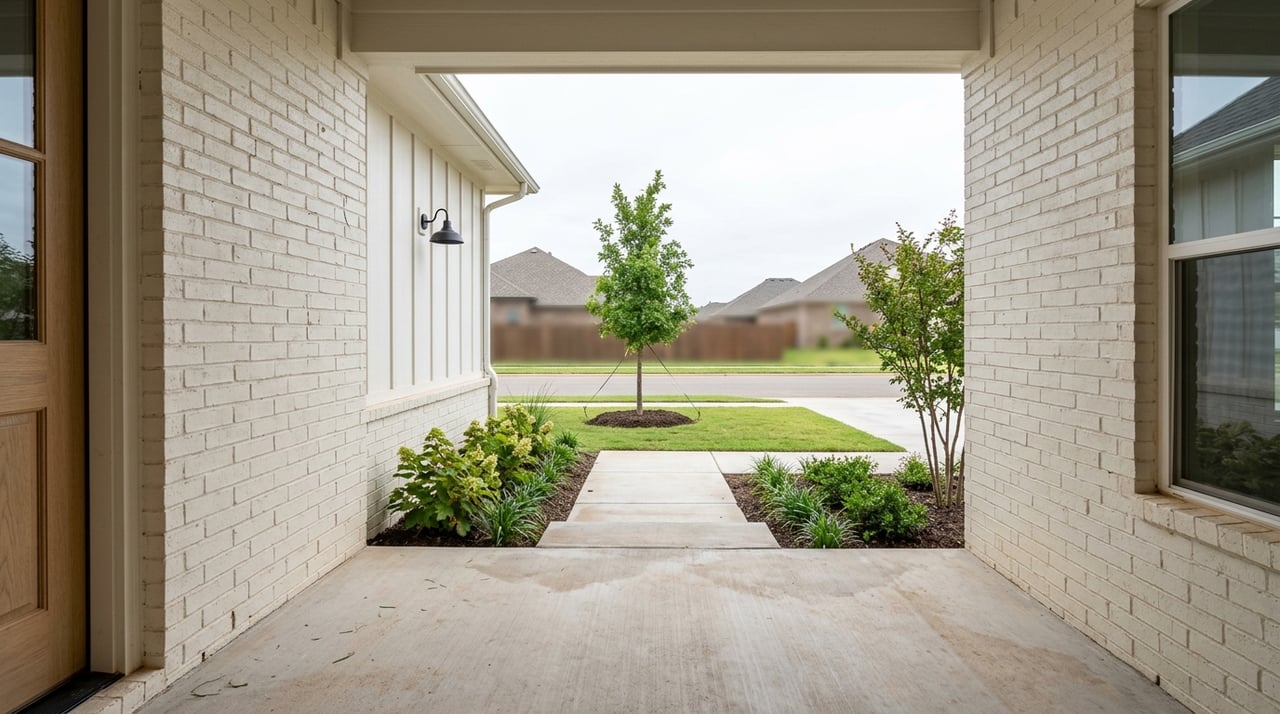
Thinking about buying a brand-new home in Tontitown? It can be exciting to picture fresh finishes, modern layouts, and fewer immediate repair projects, but not every new construction neighborhood offers the same experience. If you are comparing communities in Tontitown, it helps to look beyond the model home and understand how location, lot size, utilities, timelines, and contract details can shape your decision. Let’s dive in.
Where New Construction Is Growing
New construction in Tontitown is not spread evenly across the city. Current planning activity shows growth clustering in a few key areas, including Renley Rae near Klenc Road and Morsani Avenue, Bariloche on Klenc Road, and Christina Estates on Taldo Loop.
City planning materials also reference larger multi-phase projects like South Pointe and Stable View Estates. That matters because it shows Tontitown is still actively adding new neighborhoods, which can give you more options if you want a newer home in Northwest Arkansas.
One detail that can confuse buyers is the mailing address. Some homes located within Tontitown city limits are marketed with Springdale mailing addresses and ZIP codes, so the mailing address alone does not always tell you the full story.
If you are comparing neighborhoods, it is smart to verify the actual parcel location and city limits. That can help you better understand local services and other location-specific details before you move forward.
What Neighborhood Options Look Like
Tontitown new construction covers a fairly wide range of neighborhood types. Some communities feel like more typical suburban subdivisions with smaller lots and shared amenities, while others offer fewer homes on larger pieces of land.
Here are a few current examples buyers may come across:
- Renley Rae: A D.R. Horton neighborhood at Klenc Road and Morsani Avenue. City materials show a 95-lot preliminary plat, with Phase I covering 43 lots.
- Bariloche: A Schuber Mitchell community on Klenc Road. Phase II was approved as 73 buildable lots within a 136-lot planned unit development and includes a common area with a walking trail and dog park.
- Christina Estates: A smaller 11-lot subdivision on Taldo Loop with a different utility setup than some larger communities.
- South Pointe and Stable View Estates: Additional projects in city planning materials that point to continued subdivision growth in the broader Tontitown area.
For many buyers, this variety is part of Tontitown’s appeal. You may be able to stay close to the main Northwest Arkansas employment corridor while choosing between a more compact neighborhood setting or a property with more land.
Lot Sizes Can Vary More Than You Expect
A lot is not just the space your house sits on. It can affect privacy, outdoor use, drainage, and the overall feel of the neighborhood.
In Tontitown, lot sizes in new construction can vary quite a bit. Current listings and community information show some lots around 6,534 square feet, 7,840 square feet, and 0.15 acres, while some Renley Rae listings show around 0.28 acres and that community profile shows a median lot size of 10,890 square feet.
For context, the U.S. Census Bureau reported a median lot size of 8,545 square feet for new single-family homes completed in 2024. That makes Tontitown a market where you may see both smaller neighborhood lots and larger-than-average options depending on the subdivision.
You can also find estate-style pockets that look very different from a standard subdivision. Current examples include lots around 1.88 acres and even 5.34 acres, which means the phrase new construction in Tontitown can describe very different property types.
Streets, Sidewalks, and Infrastructure Matter
When you tour a new neighborhood, it is easy to focus on cabinets, flooring, and floor plans. But the neighborhood infrastructure is just as important.
Tontitown subdivision rules include standards for things like minimum lot width, minimum lot size, density, and sidewalk placement. City code also notes that sidewalks are required on many arterial, collector, perimeter, and internal residential streets.
You can see that infrastructure planning show up clearly in active subdivisions. Bariloche Phase II includes curbed streets, storm sewers, water and sewer infrastructure, a detention facility, and a common area with a walking trail and dog park.
Renley Rae planning materials also reference street, drainage, utility, and landscape infrastructure, along with a developer guarantee for certain offsite road and water improvements. For you as a buyer, this is a reminder that the neighborhood itself is part of what you are purchasing, not just the home.
Utilities Are Not the Same in Every Community
One of the biggest differences between Tontitown new construction neighborhoods is utility service. Some subdivisions have municipal water and sewer infrastructure already planned as part of the development, while others do not.
Christina Estates is an important example. City materials state that no sewer service is available there, so future lots will rely on individual septic systems.
That does not automatically make one option better than another, but it does mean you should compare communities carefully. Utility setup can affect maintenance expectations, planning for the property, and even some financing questions.
Move-In Ready vs. Build-to-Order
Not all new construction means the same timeline. In Tontitown, some communities offer homes that are already completed or under construction, while others allow you to choose a plan and wait for the home to be built.
Renley Rae has been marketed with both move-in-ready homes and build plans. Bariloche also offers available homes and buildable plans, so your path may depend on how quickly you need to move and how much personalization you want.
A general builder benchmark says homes are often completed in about 6 to 8 months once construction begins, but actual timing can vary. Permitting, weather, floor plan complexity, site preparation, and whether streets and utilities are already in place can all affect the timeline.
That is why it helps to separate the house timeline from the subdivision timeline. A lot may be released for sale before every phase of road, drainage, or utility work is fully complete.
What to Review Before You Sign
A new construction contract is often more detailed than a resale contract. Plans and specifications can include the brands, finishes, sizes, dimensions, installation details, and the process for handling change orders.
Before you sign, pay close attention to:
- Allowances for finishes or selections
- Upgrade pricing
- Estimated completion timing
- What is included in the base price
- How change orders must be documented
- Any builder-specific deadlines or requirements
This is one area where organized guidance can make a big difference. If you are relocating or juggling a tight timeline, having a clear process for reviewing selections, paperwork, and construction updates can help you avoid stress later.
Inspections Still Matter on a New Build
A common mistake is assuming a brand-new home does not need an independent inspection. In reality, inspections can still give you useful information before closing.
Consumer guidance from the CFPB says you should schedule a home inspection as soon as possible after choosing the home, and that an inspection is different from an appraisal. If the home is still being built, a predrywall inspection can be especially helpful once the foundation, framing, rough-ins, windows, and exterior doors are installed.
That kind of inspection does not replace code enforcement, but it can provide another layer of objective information. A final walk-through before closing is also important so unfinished or agreed-upon items can be documented before the transaction is complete.
Builder Warranties Deserve a Close Read
A warranty can be a real benefit of buying new construction, but you should still read the details carefully. Builder warranty terms can vary, and the paperwork matters just as much as the floor plan.
Consumer guidance notes that builder warranties for newly built homes commonly cover workmanship and materials for one year, systems like HVAC, plumbing, and electrical for two years, and major structural defects for up to 10 years. In the Tontitown area, Schuber Mitchell states that its homes come with a two-year builder warranty and up to a 10-year structural warranty, while D.R. Horton directs buyers to its customer portal and warranty request process after closing.
The key is to know what is covered, what is excluded, and how service requests are handled. That helps set realistic expectations after move-in.
Closing Timelines Can Be Tight
New construction closings can move quickly once the home is nearing completion. You will want to stay organized during the final stretch.
The CFPB says buyers must receive the Closing Disclosure at least three business days before closing. If major loan terms change, a corrected disclosure can trigger another three-business-day waiting period.
That means small delays can affect your moving plans, utility setup, or lease timing if you are relocating. Planning ahead and reviewing documents promptly can help you stay on track.
How to Compare Tontitown Neighborhoods
If you are choosing between new construction neighborhoods in Tontitown, try comparing each option through the same lens. That keeps the decision grounded in facts instead of just finishes.
Use this simple checklist:
- Location: Where is the parcel actually located, and how close is it to your daily routes?
- Lot size: Is the lot compact, average-sized, or more like an acreage property?
- Infrastructure: Are roads, drainage, sidewalks, and common areas already in place?
- Utilities: Is the home on municipal sewer or an individual septic system?
- Timeline: Are you buying move-in ready, under construction, or from plans?
- Contract terms: What is included, and how are changes handled?
- Warranty: What coverage is offered after closing?
Tontitown is appealing because it offers more than one type of new construction experience. You might find a neighborhood with sidewalks and shared amenities, or you may find a property with more space and a different utility setup on the edge of town.
If you want help sorting through the trade-offs, comparing builders, or making sense of timelines and neighborhood differences, Travis Roe can help you navigate Tontitown new construction with a clear plan and steady local guidance.
FAQs
What should you compare when looking at new construction neighborhoods in Tontitown?
- Compare parcel location, lot size, street and utility infrastructure, move-in timeline, contract terms, inspection opportunities, and warranty coverage.
Why do some Tontitown homes have a Springdale mailing address?
- Some homes within Tontitown city limits are marketed with Springdale mailing addresses and ZIP codes, so the mailing address may not fully reflect the actual city location.
Are all new construction homes in Tontitown on city sewer?
- No. City planning materials for Christina Estates state that future lots there will rely on individual septic systems because sewer service is not available in that area.
Can you buy a move-in-ready new home in Tontitown?
- Yes. Current community marketing shows that neighborhoods like Renley Rae and Bariloche may offer both move-in-ready homes and buildable plans.
How long does a new construction home in Tontitown usually take to build?
- A general builder benchmark puts construction at about 6 to 8 months once building begins, but the actual timeline can vary based on permitting, weather, site work, utilities, and floor plan complexity.
Should you get an inspection on a new construction home in Tontitown?
- Yes. Independent inspections can provide helpful information on a new build, and a predrywall inspection may be useful if the home is still under construction.